I intended to write a post addressed to the new president informing him, not that he asked, about what he should do to promote quality online education. But, after seeing a few letters in similar veins, I am attempting to be more original: who would you most like to have teach an online course on the 2008 election?
My idea was inspired by two disparate sources. One was a conversation with a student in Mario Cuomo’s course on “2008 Presidential Election: Where We Are as a Nation, Where We Want to Be, How We Get There” at Baruch College in Manhattan. The other was the results of a poll in Parenting Magazine, November 2008, on “Which candidate would you trust to watch your kids, Barack Obama or John McCain?”
In the case of the Cuomo’s course, it sounded full of lively debate from the description I heard. The downsides, however, were the constant presence of journalists and that the course consistently ran over so that many students missed the last train.
In the case of the poll, the print magazine showed that, of 2100 respondents, Obama won, 61% to 39%, and there were some printed comments about which candidate seemed most responsible and trustworthy and why. Online Obama has an even bigger lead.
Well, being a babysitter and being a teacher have more in common than most instructors care to acknowledge. With the election over, McCain will certainly have more available time for these parents who voted for him. But back to my point: who would make the best online instructor for a recap on the election?
Obama would be more likely to have the technological skills to run the class, and would certainly have a fascinating insights. But he and Joe Biden are very busy. They might delegate too many sessions to their staff. McCain, as an instructor, might be reflective, as would Sarah Palin, about what they could have done differently. And, then, of course, there is Cuomo himself, already committed to teaching on the topic of the election. From what I heard from the student, though, he might be less able to perform for an online crowd. The cast of possibilities is endless: Mitt Romney might have great insights on how the election would have gone differently had he been selected as McCain’s running mate. Not to mention Ralph Nadar’s undoubtedly unique perspective. And then there is the amazingly articulate Tony Blair, who I heard interviewed on NPR and who, like Cuomo, moonlights as a professor.
I think my final choice is Hillary Clinton, who, unlike Tony Blair, has first-hand insights on the election. Clinton has at least some technology skills, apparently, and arguably more time than Obama to devote to the course. Plus, she has a dry sense of humor that could make her a good online instructor.
Who would you like to have teach your ideal online course on the election?
Pick Your Favorite Online Instructor for a Course on the 2008 Election
Pomp and Circumstance: The Value of Ceremony for Graduations
Suppose you complete a degree at accredited online institution, which would make you feel more like a graduate:
1) If you marched across a stage, shook the hands of dignitaries, and were handed a diploma?
2) If you get your degree in the mail?
3) If you get a PDF of your degree by email?
I wondered about this because I read about how a Massachusetts hospital is giving drive-through flu shots, which disturbed me because it removes the ceremony and perhaps the seriousness of a medical procedure. The one time I voted using an absentee ballot, I felt the same and missed the ceremony and seriousness of walking into a voting booth. Of course there are other situations where convenience outweighs ceremony any day, such as using an ATM or doing online banking, instead of going into a bank.
Graduation is a ceremony that people look forward to and celebrate with parties. For online students, it offers them an opportunity to – finally – meet their teachers and fellow students, or at least those who also travel to it. A graduation ceremony cements the fact that a degree was awarded and, even the name, commencement, refers to how life has been forever altered. There is definitely a role for ceremony, even when convenience is the trend in so many other aspects of our lives.
Tweed Jackets, Black Turtlenecks, and Speculation about Apple University
 While the origin of “university” is guild or corporation, the modern definition is “an institution of learning of the highest level, having a college of liberal arts and a program of graduate studies together with several professional schools… and authorized to confer both undergraduate and graduate degrees.” When I worked at EDS, EDS University certainly did not fit that definition, being primarily, as you might suspect, the virtual repository of internal training. Many other large companies have such universities, one of the best known being the cunningly named Hamburger University, where thousands of McDonald’s employees attend classes each year. And soon there will be Apple University.
Not only is Apple starting Apple University, but they are getting a lot of press for plans that are vague in the extreme, leading to speculation. Of course, Apple University might be cast in the same mold as other corporate universities, but one suspects otherwise because they hired Joel Podolny, the dean of the Yale School of Management, as dean.
The fact that there is so much press means little, since, as far as I can tell, if Steve Jobs sneezes or buys a new turtleneck, it’s in the news. But then why bring in a “dean” whose departure from his current position at Yale is bound to attract attention?
And here I am writing about it too. I will admit to being curious about their goals, and also amused by the speculation. One comment was that the project “is either about marketing Apple systems to higher education or building an accredited online college program, not about educating its own employees. Apple already has an excellent Apple Management Training program (a sort of two-week Readers-Digest-condensed MBA) and sales training programs. But Apple doesn’t need a Yale Dean to run those.” I agree, and as I imagine the various types of programs this could be, come back to why someone with ivy league experience is needed for leadership. Another comment was that “this might be an audition for the role of Jobs’ successor”.
If Podolny trades in his tweed jacket for a black turtleneck, the latter comment will carry some weight. And it will be fascinating to see what Apple has planned once a more substantial announcement is made.
“I’ll probably be taking more courses online now”
 The “US corporate market for Self-paced eLearning reached $5.2 billion in 2007” according to a report from Ambient Insight. This is roughly equivalent to the GNP of Burkina Faso, which used to be the most illiterate country in the world, or Cambodia. It is also the same amount that the Wall Street Journal reports the global airline industry could lose this year. Interestingly, the higher fuel costs that the airline industry’s losses are attributed to are one of the reasons students are choosing online programs. I wonder if students who make such choices for purely economic reasons – or who don’t really have a choice because they can’t afford the gas – ultimately embrace their online courses or, as the New York Times reports, prefer “on-campus study, ‘but with the price of gas jumping up, I’ll probably be taking more courses online now.'”
eLearning in the News
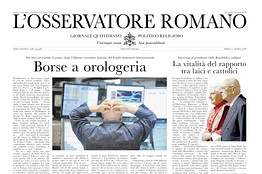 Just for fun and totally fabricated: ACM’s new president, Wendy Hall, a longtime advocate of e-learning, told me she had a new vision for eLearn Magazine. I flew to London where we met for afternoon tea at the Ritz. Wendy, inspired by the Pope’s makeover of the Vatican’s daily newspaper, L’Osservatore Romano, wanted more coverage of the impact of the news on e-learning. “Which US Presidential candidate will most benefit online education?”, she asked, sipping Earl Grey. “Which online course will help me revise my investment plan?” She posed questions faster than I could spoon clotted cream onto my berries. “Which bank bailout plan will help struggling online students? If the Vatican can ‘put a biblical spin on the financial crisis’, you can put an e-learning spin on everything.” My afternoon assignments were to go to the Tate Modern to review new exhibits for the expanded arts section before checking out the best attire for online teaching at Harrods. “Will you take this on?” Wendy asked. “Is the Pope Catholic?” I replied.
Thanks to today’s Wall Street Journal’s article, “Is the Pope’s Newspaper Catholic?”, for inspiration.