 Journalistic integrity aside, I was pleased that Stephen Downes gave me a “B” for my 2008 prediction. I put more effort into asking people for and compiling predictions than into writing my own. But knowing that Stephen will likely do this again in a year makes me want to think harder about my 2009 prediction.
I wrote about rating faculty in a previous blog post. I thought about that post yesterday when I taught a BostonCHI professional development seminar on Online Consumer Health. We had a lively discussion about what it means to rate doctors or hospitals, what the advantages are from the patient perspective, and how information like that might be used. While there are many rating sites, they are typically part of a health site. Their biggest drawback, my students decided, was lack of context. Even when you get a recommendation from a stranger, there is a context to where you met that person, even how healthy the person looks.
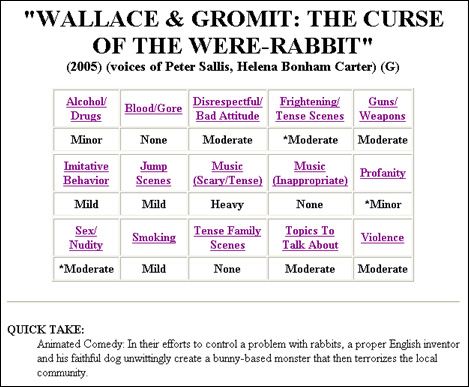
In our increasing consumer-driven society, does anyone behave differently if they know they are being rated? I certainly believe so, although I hope most people have the professional integrity to do their best regardless of any feedback mechanism. On the other hand, many people become adept at gaming the system, so to speak. I have read, in medicine, that this can be a problem with pay-for-performance plans. And I know how Stephen thinks enough to know that certain types of predictions are more likely to win his praise. But I will stick to mine for now, hoping for an “A” or “B”. Or perhaps, like the increasingly complex movie rating systems, can offer Stephen a more fine-grained approach for rating predictions. Or, better yet, I can ask him to rate the 2009 predictions now and then, a year from now, can rate Stephen’s accuracy at judging the accuracy of the predictions.
RateMyPredictions.com
Economic Crisis Blah Blah Blah
 After compiling eLearn Magazine’s Predictions for 2009, I am suffering from economic crisis fatigue in a way I hadn’t during the height of the Bernie Madoff scandal. Many of the predictions I received use this as a launching point. This is not surprising given the far reaching implications of the financial state of the world on every aspect of our personal and professional lives. And many of these predictions showed the multitude of perspectives the contributors have on e-learning, and many are quite likely to come to fruition, I believe.
My first encounter with the term fatigue, in this context, was in a discussion about how AIDS fatigue had set in and fewer people were using precautions. The overexposure of anything in the media – the US presidential election, Steve Jobs’ health – can itself shape people’s reactions.
Instead of focusing on the implications of troubled financial times, let’s look at innovations. There seem to be more new websites than I can possibly check out, and the ones that I use frequently seem to be adding new features all the time. In fact, I recently played around with LinkedIn Groups, wanting to see how they differed from Yahoo Groups, ning, and the other ways to easily bring a group of people with shared interests together. I even tried something new for the predictions column, and solicited predictions in 2 of the learning groups in LinkedIn, with the promise of using the best ones in the column. In both groups I had excellent predictions and had a hard time deciding which to use!
Then there are the new phones (and iPhone apps), the Kindle, and the usual smaller, cheaper, more powerful assortment of devices that I more often observe others using than adopt for myself. They make my once-treasured TI calculator from college look like something that belongs in a museum.
I hope that innovation continues so that, a year from now, I can look back with awe at what happened in 2009. Here’s to a happy, healthy, and innovative New Year for all!
An Ode to Informal Learning and Happy Endings
 The Unseen Struggle
Behind many polished results are countless unseen struggles, and often these terminate in frustration. When I wrote about a wandering ant exhibit at the Tate Modern, I described the enlightenment that came from “the increased realization, as one moved closer, of how they were made, aided by a description on the wall.” The unseen struggle I refer to here was not that of the ants, but of knowing what to call the card on the wall.
I searched museum and art sites and asked people, including making phone calls to a museum. Finally I gave up and published my blog post, but I never completely forgot my quest. Everything has a name.
Solutions Are Found When You Least Expect Them
This week I was a parent chaperone on my 4th grade daughter’s field trip to the Egyptian wing of the Boston Museum of Fine Arts. We had a great docent and 2 docents-in-training who accompanied us. I learned a lot from them about the rigorous training docents receive (none of which is online). As we were leaving the museum, my quest from months ago popped into my head and I asked someone at the information desk what the cards on the walls are called. She said that she didn’t know, and, undaunted, I asked the person next to her, who said “wall text”. This was confirmed by another museum staffer.
Cautiously elated, I searched on “wall text” to mixed results, but “museum wall text” confirmed that this was indeed what the cards are called. I further learned that “European museums used wall text before Americans did. In an excellent essay devoted to wall text in the collection What Makes a Great Exhibition? Ingrid Schaffner writes that in 1857 the British House of Commons passed a ‘rule’ that in national museums objects would be accompanied by ‘a brief Description thereof, with the view of conveying useful Information to the Public, and of sparing them the expense of a Catalogue.’ (Schaffner quotes from a 1957 pamphlet by F.J. North, Museum Labels: Handbook for Museum Curators. Bet that was a page-turner.) By 1890, says Schaffner, labels were printed for general distribution. They regularly ran to 300 words and ‘threatened to turn exhibition displays into textbooks.'”
The Happy Ending
1) People with the right expertise are adept at dealing with incomplete information. The Internet is a wonderful resource as long as you know what to call something.
2) People appreciate feedback, like the museum staffer who saw my face light up. The Internet never knows or cares if a mission was satisfactorily accomplished.
3) Persistence pays off eventually. Since I received positive feedback on my last use of lyrics, I will quote from Don Quixote: This is my quest; To follow that star; No matter how hopeless; No matter how far.
4) Informal learning happens when you least expect it.
“Baby, It’s Cold Outside” – Warm-Up Exercises for Online Courses
 I simply must go – Baby, it’s cold outside
The answer is no – Ooh baby, it’s cold outside
This welcome has been – I’m lucky that you dropped in
So nice and warm — Look out the window at that storm
I’m not writing about music, Ella Fitgerald, or the weather, although it is actually feels like November in Boston right now. I’m writing about warm-up exercises, which, understandably brought these lyrics to mind.
I have attended sessions at ASTD and other conferences on warm-up exercises. And I have taken classes that started with warm-up exercises. I remember one, offered by IBM/Lotus, where we had placards on our tables and had to write our name on one side and the place we most want to travel to on the other. Then, when we went around the room, we had to introduce ourselves with the location and the reason we want to go there. The exercise did not generate deep bonding.
Based on my less-than-positive experiences with warm-up exercises, I struggled to find ones that worked in my own teaching, realizing that classes are generally more successful when students feel connected. Online it can be harder to build camaraderie. I had techniques, such as parties in virtual worlds, that worked once a class was in session and people knew each other. (It was surprising how closely these parties replicated real life get-togethers.) I asked my students to complete profiles prior to the start of class so that we could all get to know each other a little. But my first sessions rarely had anything more frivolous than going through my roster for quick introductions.
Hence I was delighted to read Felicity O’Dell’s comment:
A simple task like asking each student to describe what they can see from their window or around them as they sit at their computer working on the course is an easy and unthreatening thing to do and can build confidence in people who may be unused to posting to a group. It also helps everyone get a sense of the other students as real people and so seems to make the collaborative learning experience of the course richer and more engaging.
My students were often scattered throughout the world and I wished I had tried this with them, especially given the different locations, time zones, and weather. Curt Bonk made a comment that he likes “using YouTube videos to start or end discussion in class.” I can easily imagine that a well-chosen video (probably not a turntable) could provide a catalyst for a great discussion in the beginning of a class when people don’t know each other yet.
Do you have warm-up exercises that have been successful? Or ones to avoid?
Teaching Tips
 David Pogue wrote a New York Time’s column with technology tips. Many of the tips I know, such as use the tab key to go to the next box when filling out a form, but I found some new ones, especially when looked at a few of the 1351 comments, many consisting of readers’ tips. As Pogue and his comment authors demonstrated, many people want to spread the word when they either devise or learn a tip that substantially improves their life.
As an online instructor, I came up with some ways to, I believe, increase engagement and learning as well as developing useful skills. Here are my favorite e-learning tips.
1) During synchronous sessions, I used rotating student scribes who would take notes during that session to distribute to all. It had the advantages that at least one student was fully attentive and all benefited from the notes, especially anyone who missed class or whose native language was not English. On a few occasions it was great for me if I needed a recap of part of the class discussion.
2) Also during synchronous sessions, if I had a chat session, I would ask a student to moderate the chat. The student would be expected to respond to questions, where possible, and to notify me of ones I needed to answer, freeing me from reading the chat while speaking.
3) In any online course where students post in a discussion forum, I would ask a student to moderate a discussion topic and post a daily summary. Students were generally more conscientious about posting in time for the daily summary, and busy students could read the summary if they didn’t have time to read every post. And of course I could focus on reading the summaries if I was strapped for time.
4) And my final tip, also for any online course where students post in a discussion forum, I would highlight a post-of-the-day on the course home page. Students loved the recognition for their insightful comments, and would occasionally get competitive, emailing me that they thought their post was more enlightening than the one I chose.
What are your favorite tips?